
Relationship Wealth · The Stewardship

On the couples
we are responsible for.

This page tells you what we believe, who we built this for, and what we have seen in real couples doing everything right and still drifting apart. If something on this page feels familiar — that feeling is the point.

Eric & Haydee Rodriguez · Founders

I. The Stewardship

A promise to the couples
in our care.

We didn't build this because we had all the answers. We built it because we know what it feels like when two people who love each other slowly stop understanding each other — and once you've felt that, you can't look away from it in anyone else.

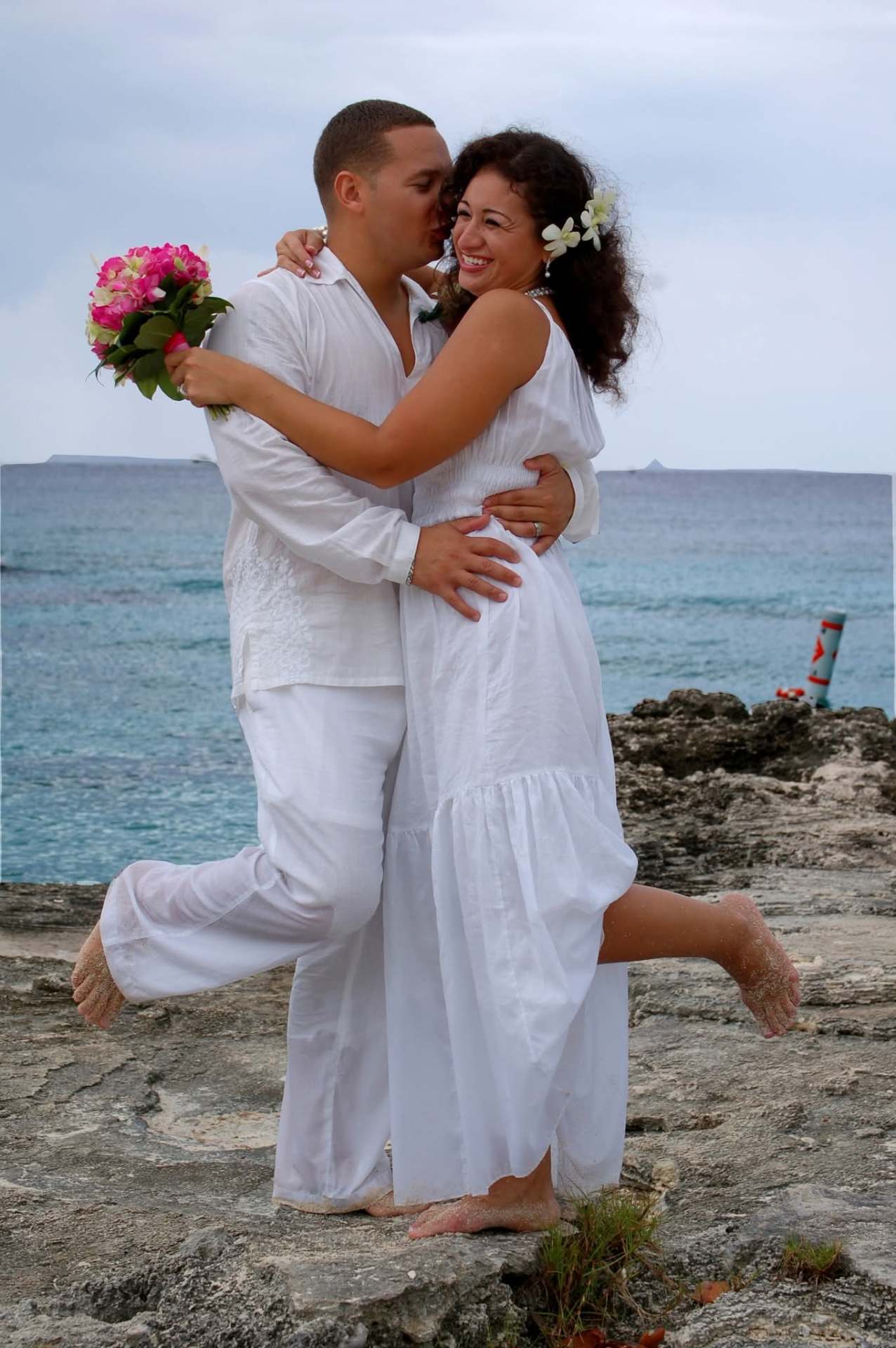
Eric and Haydee Rodriguez on their wedding day, barefoot on the beach in white.
The two people who made the promise. Together since 2002.

There is a type of couple that has always felt important to us.

Not the loudest. Not the most public. The quietly trying couple. The one where both people show up every day, love each other, do everything they were told to do — and still carry a low-grade loneliness inside the relationship that never quite goes away. Even when things look good from the outside.

We have sat with couples after twenty years of marriage who could barely look at each other. We have also sat across our own kitchen table, exhausted, with three kids asleep upstairs, wondering how two people who chose each other so deliberately had ended up speaking past each other for months.

Both experiences taught us something the other could not.

What we learned from sitting with other couples: a clear, research-based way of looking at how two people actually work together — the kind of thing the Gottmans spent forty years mapping — is not only for couples in crisis. It is simply intentional. And for most couples, nobody has ever offered it.

What we learned in our own house: the gap between a marriage that feels close and one that quietly comes apart is almost never about how much the two people love each other. It is almost always about whether anyone was watching the whole picture.

That is what Relationship Wealth is for. Not therapy. Not a lecture. A coordinated, twelve-hour stretch of attention — research-grounded, privately held, and personally motivated because we have lived what it costs when that attention is missing.

The gap between a marriage that feels close and one that quietly comes apart is almost never about how much the two people love each other. It is almost always about whether anyone was watching the whole picture.
i.

We will always look at the whole relationship.

Not just the fight you had last week. Not just the topic that brought you in. We look at how you talk, how you repair, how you build closeness, how you handle conflict, and how you dream about the future — together, as one system. Every observation we make comes from seeing all of it.

ii.

We will tell you what we see, even when it is uncomfortable.

If a pattern is corroding the trust between you, we will name it clearly. If something already good is being overlooked, we will name that too. You did not give us twelve hours so we could be polite. You gave us twelve hours so you could see the truth of how you function.

iii.

We will give you tools, not just insight.

Insight without practice is interesting and useless. Every framework we share, you will practice in private — just the two of you, in a breakout — before the workshop ends. The work is not a document you take home. It is something you have already started doing.

iv.

We will hold what you share carefully.

Nothing said in a private breakout leaves it. We never ask couples to share with the group. We have sat on both sides of this work. We know exactly what it costs to be honest in front of your partner, and we treat that cost with the seriousness it deserves.

v.

We will respect what you have already built.

Every couple who comes to us has done something hard. They chose each other. They kept choosing each other. They built a life worth protecting. We do not take that lightly. We have nearly lost ours. We know exactly what is at stake.

This is not a mission statement for a website. It is a promise — made by two people who earned the right to make it, to the couples who trust them enough to accept it.

Eric and Haydee Rodriguez with their three children and dog, photographed beneath cherry blossoms.

Eric & Haydee Rodriguez

Founders of Relationship Wealth.
Lead facilitators of the workshop.

Certified Lead Facilitators — The Seven Principles for Making Marriage Work, The Gottman Institute.

Eric Rodriguez, Accredited Financial Counselor (AFC®).

Together since 2002. Three kids. Still learning.

Cherry Hill, New Jersey

Built after everything we learned the hard way.

II. Who this was built for

Three couples we
recognize immediately.

01The Newly Joined

The Couple Building Something New

Two lives.
Two histories.
One household nobody has fully introduced yet.

They are early. Married a year, maybe three. Or stepping toward marriage with real intent. Both careers are demanding. Both people are smart, ambitious, and used to figuring things out on their own.

And yet — small disagreements keep landing harder than they should. Not because either of them is doing anything wrong. Because they have never sat down, on purpose, and looked at how their two operating systems were going to actually run a single household together.

They have friends. They have family who mean well. They may have read a book or listened to a podcast. But nobody has ever put both of them in the same room and said: here is how you actually work, here is where you are about to drift, and here is how to build the muscles now — while it is still easy to build them.

So every month, small misunderstandings accumulate. Small habits set in. And the couple pays the cost of that gap — quietly, consistently — without ever knowing it has a name.

What they say
"We love each other. We're doing everything right. So why does it feel like we keep having the same small fight in different costumes?"
What changes

The workshop puts language on the patterns for the first time. Not in the abstract — specific moves, practiced in private breakouts, that you take home the same week. Most couples in this portrait leave with two or three concrete changes to how they communicate, and a shared map of where they were about to drift.

02The Quietly Drifting

The Long-Married Couple Who Stopped Noticing

Years of love.
Years of logistics.
A friendship that quietly thinned out underneath.

They did not arrive here in crisis. That is part of what makes it disorienting. The bills are paid. The kids are mostly fine. The house works. From the outside, this looks like a marriage that succeeded.

But somewhere in the middle years — when the careers got heavier, when the children needed everything, when the calendar took over — the friendship at the center of the relationship got quietly smaller. Not because either person stopped caring. Because nobody was watching it.

Now they are sitting across from each other on a Tuesday night, polite, tired, grateful, and a little lonely. They cannot remember the last real conversation they had that was not logistics. They are not sure how to start one without it feeling like a confrontation.

Most couples in this portrait have not been failed by their love. They have been failed by the absence of structure around it. Twelve quiet hours, on purpose, is often the first time in years anyone has invited them to look at each other instead of the calendar.

What they say
"We're fine. We're really fine. So why do I miss him when he's sitting right next to me?"
What changes

The workshop rebuilds the friendship at the center, deliberately. The Gottman research is clear that fondness and admiration can be reawakened on purpose — and we walk you through exactly how. Most couples in this portrait describe the first week after as the closest they have felt to each other in years.

03The Stuck Loop

The Couple Caught in the Same Argument

The same fight.
The same words.
A pattern neither of you chose, that neither of you can stop.

They love each other. They want this to work. Both of them have said, out loud, that they are committed. And both of them keep ending up in the same argument — about money, about the in-laws, about housework, about sex, about a thousand surface topics that all feel like the same fight wearing different clothes.

They have tried. They have read things. They have apologized and meant it and watched themselves do it again three weeks later. Each cycle leaves a little more residue. Each cycle makes the next one slightly faster to start.

What nobody has shown them yet is that the loop has a structure. There is a name for what is happening. There are specific repair moves — not platitudes, actual moves — that interrupt it. The Gottmans spent decades watching couples in this exact pattern and mapped, with research, what gets them out.

Most couples in this portrait have been told some version of: you just need to communicate better. That advice is true and useless. What they need is to see the loop from the outside, and to practice the specific exits, in private, until the exits become available in real time.

What they say
"I know exactly what I'm doing while I'm doing it. I just don't know how to stop."
What changes

The workshop names the loop and gives you the exits. You will practice them in a private breakout — just the two of you — before the day ends. Couples in this portrait often report that the next version of the fight, the one that always came back, simply did not show up the same way.

III. Three quiet recognitions

What we have seen.
No names. Because the names are not the point.

i.

The Tuesday-Night Sentence

A pediatrician and a contractor, married fourteen years, two kids in middle school. They came in because she had said, in passing, on a Tuesday night, a single sentence: I don't know if I'm still in love with you. She had not planned to say it. She did not want to mean it. But she had said it, and the sentence had been sitting in the room ever since.

He had spent two weeks not sleeping. She had spent two weeks not knowing how to take it back. By the time they sat down with us, neither of them had said the sentence again. Neither of them had been able to talk about anything else, either.

What the workshop revealed was not what either of them expected. The sentence was not the problem. The sentence was the only honest thing that had been said in their kitchen in three years. The friendship had quietly emptied out. The bids for connection had been missed, both directions, hundreds of times. Neither of them was leaving. Both of them were starving.

By the end of the twelve hours they were not fixed. Nobody is fixed in twelve hours. But they had a name for what had happened, a structure for rebuilding it, and the first real conversation they had had in years.

The sentence was not the diagnosis. It was the smoke alarm. The fire was the absence of attention.

ii.

The Argument That Wouldn't Land

A lawyer and an architect, together eleven years, no children. They had what their friends described as a great relationship. They thought so too, mostly. There was just one argument — about how to spend weekends — that had been running, in different forms, for nine of those eleven years.

They had tried compromise. They had tried alternating. They had tried not talking about it. The argument always came back, slightly faster each time, slightly more tired.

What they discovered, in a private breakout in the back half of the workshop, was that the weekend argument was not about weekends. It was about a much older question — what does rest mean, what does love look like on an unstructured day — that neither of them had ever asked the other one out loud.

The argument did not vanish. The Gottmans are clear: most ongoing disagreements between couples never fully resolve. But it stopped being corrosive. Once they could see the dream underneath the position, they could stop fighting about the surface.

They did not need to win the argument. They needed to understand what the argument had been protecting.

iii.

The Couple Who Almost Didn't Come

An engineer and a teacher. Married nineteen years. He almost did not come. He told his wife, the morning of, that this was not for him — that he was a private person, that he did not believe in workshops, that he would do whatever she needed but that this was not it.

She told him, calmly, that she was going either way. She had not asked for much in nineteen years. She was asking for this.

He came. He spent the first two hours with his arms crossed. By the middle of the day, in a private breakout, he said something to his wife that he had not said in fifteen years — not the words I love you, which he said often, but a specific, particular thing about how he saw her, that she had not heard from him since they were dating.

She cried for ten minutes. He did not know what to do. They sat there. Then they kept going.

He emailed three weeks later. The email was four sentences long. The last sentence was: I was wrong about what this was.

He did not need to be convinced. He needed twelve hours where the only thing being asked of him was to look at the woman he had chosen.

The couples who build lasting love
are not always the ones who started easiest.
They are the ones who stopped the drift first.

If something here felt familiar, you do not need to decide anything today.

You are welcome to keep going when you are ready.

Eric & Haydee · Cherry Hill, New Jersey